


Cleaner
Cleaning Products Certification
Made with over 95% ingredients of natural origin and plant-derived cleaning agents. Restricting specified chemicals, assessing effects on aquatic life, avoiding animal testing and respecting workers’ rights.
About the certification
Friend of the Sea cleaning product certification assesses specific formulations and the production activities behind them. Checks cover ingredient composition, animal testing, effects on aquatic systems, management practices and labour conditions.
Manufacturers, suppliers and end brands can apply for the cleaning products they produce or sell. Buyers can verify the approved products, while applicants can prepare formulation, supplier and production evidence.
What can be certified
Certification applies to the named cleaning products and formulations in the approved scope. Relevant production sites and brands are identified during the application. Approval of a product does not automatically cover the manufacturer’s entire range or a cleaning service that uses it.
What the standard covers
The producer must appoint a manager with defined duties, maintain written compliance procedures and complete an internal review each year.
Products must not be tested on animals and must not contain ingredients or derivatives of animal origin.
More than 95 percent of ingredients must be of natural origin, and all surfactants must be of vegetable origin. Parabens, sodium laureth sulfate and non-natural dyes are excluded. Isothiazolinones in paper are also excluded.
The formulation is checked against a limit of less than 0.00004 percent for nickel, chromium and cobalt. Ingredient and product evidence must support compliance.
The assessment considers how formulations break down and their toxicity in aquatic systems through the Critical Dilution Volume method. This evaluates dilution needed in relation to aquatic effects; it is not permission to discharge a product directly into water.
Recommended measures include biodegradable or recyclable materials, label dyes free of toxic substances, reduced packaging and clear disposal instructions. These packaging measures are recommendations rather than compulsory conditions.
Energy-consumption records must be updated at least annually. Calculating and reducing non-renewable energy per unit of product, and increasing renewable energy use, are recommended improvements.
Checks cover child labour, minimum legal wages, access to health care, safety measures and accident records. Forced labour and discrimination are prohibited, and freedom of association and collective bargaining must be respected.
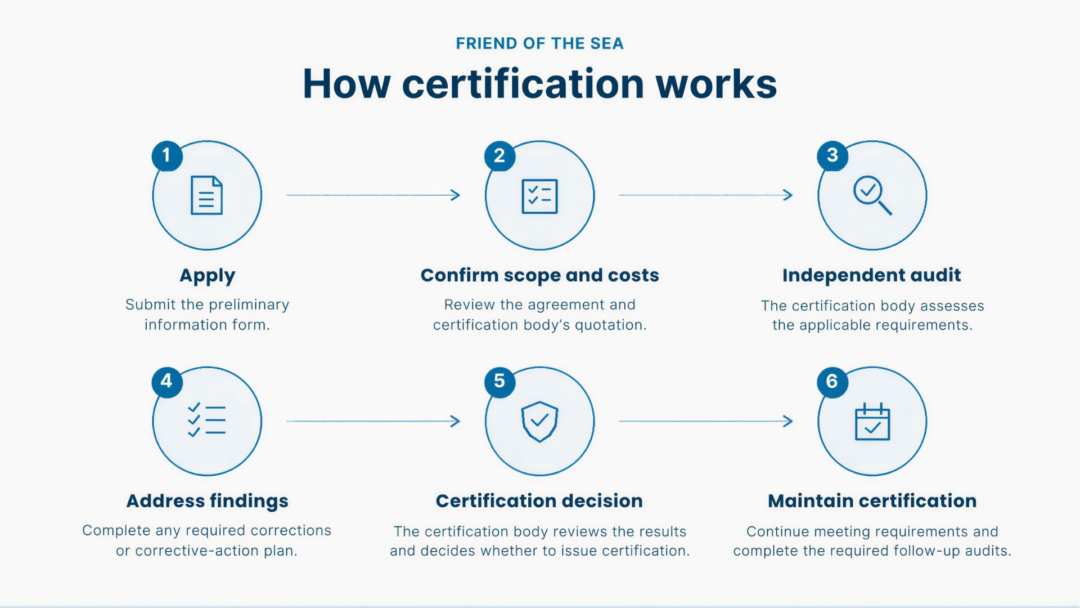
Certification fees
Suppliers and end brands use the same published price list. Annual logo royalties and audit costs are separate, with VAT additional where applicable. Request a quotation to confirm the category, products and activities included.