



Blue Crab and Responsible Fishing
Practical solutions for the sea. A future for those who depend on it.
Friend of the Sea and the World Sustainability Foundation invite companies, cooperatives, fishers, researchers and individuals to propose projects to contain blue crab, reduce bycatch and support small-scale Italian fishing businesses.
Submit your project →Read the press release ↗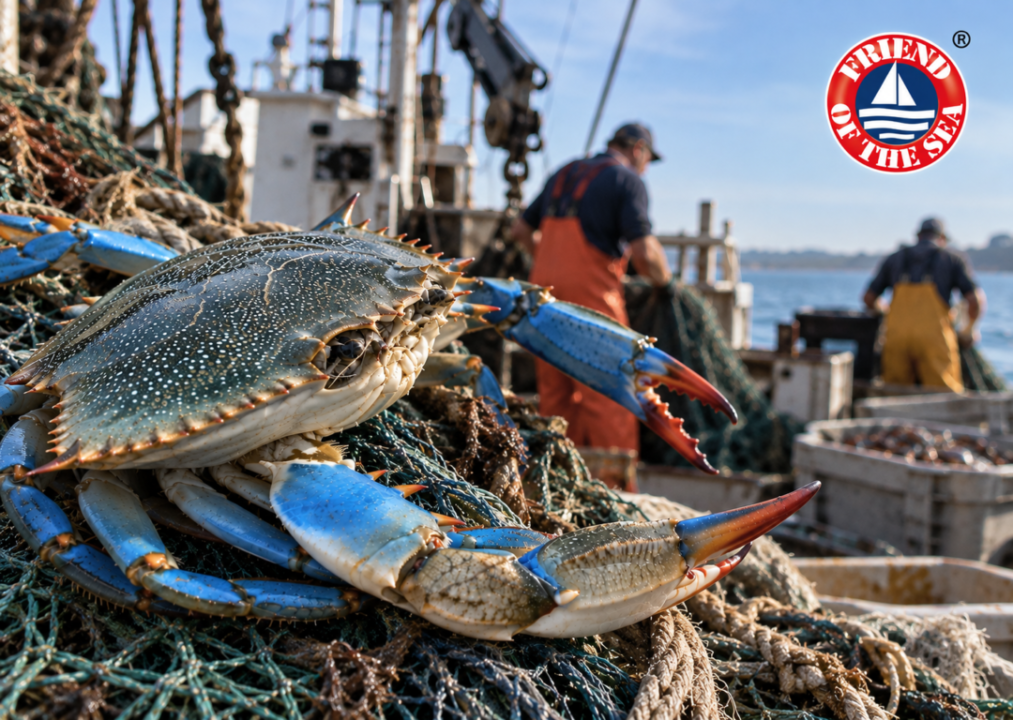
Support available and indicative timetable
The planned budget to support projects in the first phase is €50,000, with the ambition to support 1–3 projects. The final number and scale of projects will depend on the quality of proposals, their funding requirements and the resources secured.
World Sustainability Foundation (WSF) brings together practical solutions, financial support and relevant expertise. Depending on the proposal and available resources, support may include direct financial contributions, help identifying external funding partners, and connections with researchers, technical specialists and businesses.
We aim to complete the initial selection by 31 December 2026 and begin implementation from February 2027, subject to funding, any necessary authorisations and project readiness. Applicants should propose realistic milestones and explain any dependencies that could affect delivery.
Independent certification
We also aim to help small-scale operators overcome barriers to independent environmental certification. Where resources allow, support may include contributions towards audit and certification costs, potentially covering the first year. Applicants may suggest a relevant scheme, including schemes other than Friend of the Sea, and explain its relevance and anticipated costs.
Support does not guarantee certification: this remains subject to compliance with the applicable standards and independent assessment. Participation in the initiative does not itself authorise certification claims or use of the Friend of the Sea label.
Containment must remain the objective
The initiative aims to reduce the damage caused by an invasive species while supporting affected coastal communities. Commercial use of catches can help offset removal costs, but sales alone cannot demonstrate environmental success.
Explain how your project would remain viable as local blue crab abundance declines. Commercial plans should recognise that successful containment could reduce the volume available. WSF would not support deliberate breeding, stocking, release or introduction into new areas, or arrangements intended to maintain wild populations for future supply.
Safeguards to address in your proposal
- Capture methods: describe locally appropriate, selective gear and operating practices, and how you will record fishing effort, non-target catches and habitat impacts. Explain how non-target animals will be released promptly and safely where appropriate.
- Catch handling: describe measures to prevent escape or release during landing, storage, transport and processing, alongside hygiene, temperature control and animal-welfare practices. Flag any handling of live crabs, which would require particular scrutiny.
- Traceability: explain how records will identify the species, capture area and date, fisher or vessel, gear, quantities landed and subsequent buyers, maintaining batch identification through processing and distribution.
- Accountability: identify who is responsible for safeguards and monitoring, how supporting records will be available for review, and how problems will be corrected. Breaches of containment safeguards may lead to corrective action or withdrawal of project support.
These expectations would be translated into project-specific conditions with the relevant technical expertise.
Show how you will measure results
For each supported project, we propose to agree a proportionate monitoring plan with a baseline, measurable objectives and a reporting timetable established at the outset. In your application, describe the data already available, any gaps, who will collect the information and the cost of monitoring.
Choose indicators relevant to your intervention. These could include:
- Blue crab pressure: standardised abundance surveys where feasible, catch per unit of fishing effort, size and sex composition, and quantities removed.
- Bycatch and fishing impacts: number, weight and species composition of unwanted catches per unit of effort, survival where measurable, and recorded habitat impacts.
- Aquaculture losses: changes in crab-related shellfish mortality, damage and marketable production at participating farms.
- Business benefits: additional net income for small-scale operators after capture, handling and processing costs; changes in losses and operating costs; and the number of businesses benefiting.
We would seek to use existing data and work with scientific partners where possible, keeping reporting manageable for small operators. Comparisons should account for seasonality and changes in fishing effort, using comparable untreated sites where feasible.
Tonnes landed and sales revenue are outputs, rather than proof of containment. Explain how you will assess whether the intervention reduces blue crab pressure, bycatch or damage while improving the position of affected businesses. Targets would be set project by project once baseline data are available; findings would guide whether an approach should continue, be adapted or expanded.
How to prepare your application
Companies, cooperatives, fishers, researchers and individuals are invited to submit a detailed, practical proposal. Use the form below and attach a document covering:
- The problem and location: the area concerned, the impacts being addressed, available baseline information and the intended beneficiaries.
- The proposed solution: activities, capture and handling methods, containment safeguards, traceability and a business model compatible with declining crab abundance.
- People and responsibilities: the lead applicant, participating fishers or businesses, scientific and technical partners, and each party’s role.
- Delivery: implementation timetable, milestones, authorisations required, project readiness and main risks.
- Budget and support requested: itemised costs, currency, the contribution sought from WSF, other funding sources and whether those funds are confirmed or still being sought.
- Expected results and monitoring: concrete environmental and business benefits, proposed indicators, baseline, data collection responsibilities and reporting timetable. Distinguish forecasts from evidence already available.
- Certification, if proposed: the scheme, its relevance to the project, expected audit and certification costs, and any support requested.
Provide as much detail as possible and identify any information still to be confirmed. Attach one PDF, DOC or DOCX file, maximum 10 MB. Compress larger files before uploading. For help with supporting material, contact info@worldsustainabilityfoundation.org.
Submit your project
Tell us about your proposal and attach a document with as much detail as possible. Fields marked * are required.